
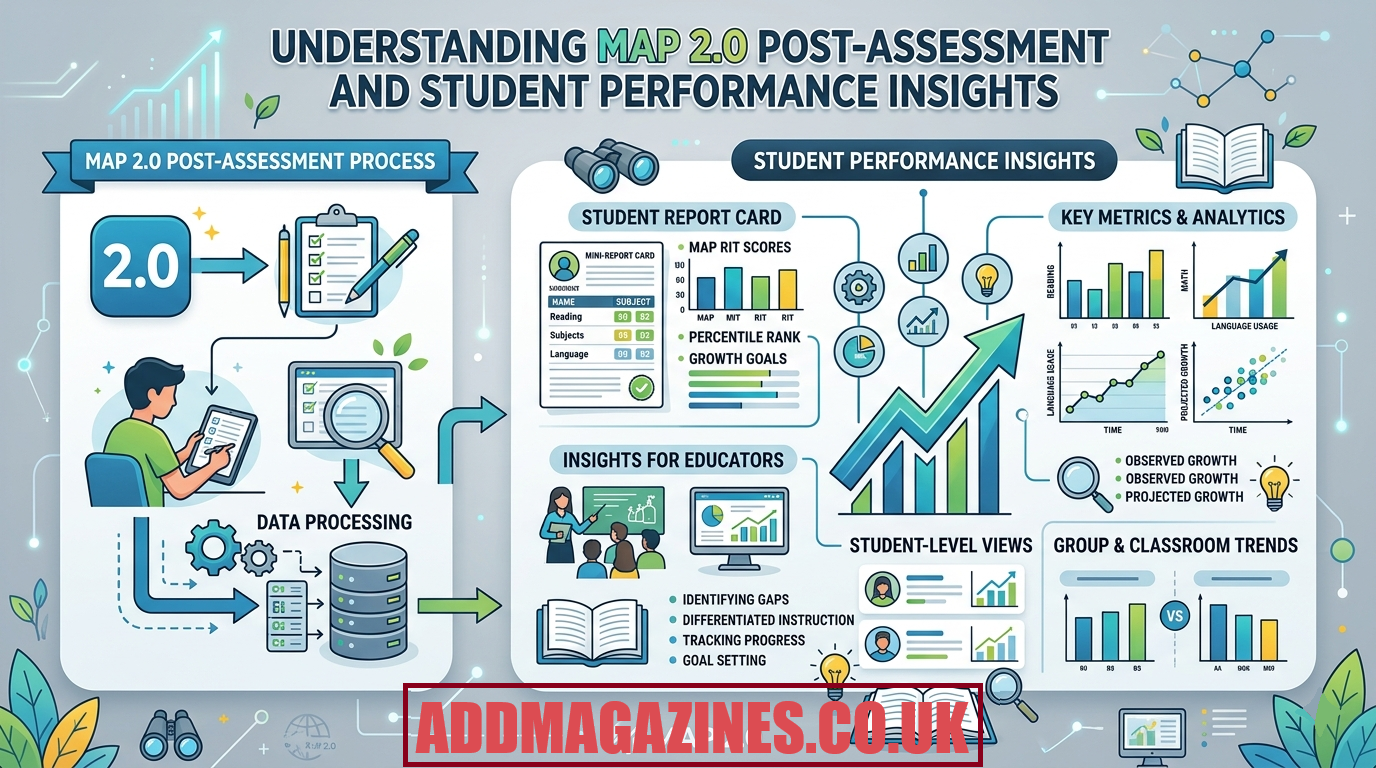
The MAP 2.0 assessment system has become an essential part of modern education, especially in K–12 learning environments where tracking student growth is a priority. It is a computer-adaptive testing program designed to measure what students know and how they are progressing over time in subjects like math, reading, language usage, and science. Unlike traditional exams, MAP 2.0 adjusts its difficulty based on each student’s responses, making it more personalized and accurate in evaluating academic development. Many students and parents often search for guidance related to Map 2.0 post assessment answers, hoping to better understand what comes after testing. However, the real value of MAP lies not in memorizing answers but in interpreting results to improve learning outcomes. This article explores how MAP 2.0 works, what post-assessment results mean, and how students can use this information to grow academically in a meaningful way.
What MAP 2.0 Really Measures in Students
MAP 2.0 is not just a test of memorization; it is a diagnostic tool that evaluates a student’s skill level in real time. The system uses adaptive technology to adjust questions based on whether the student answers correctly or incorrectly. If a student answers correctly, the next question becomes more challenging, and if they answer incorrectly, the difficulty level decreases slightly. This allows educators to pinpoint exactly where a student is excelling or struggling. The test generates a RIT score, which reflects a student’s instructional level rather than grade level alone. This makes MAP 2.0 highly useful for tracking long-term academic growth. Instead of focusing on fixed answers, the assessment highlights learning patterns, strengths, and gaps. Understanding this helps remove the misconception that there are simple answer sheets or shortcuts to success in the evaluation process.
How Post Assessment Results Are Structured
After completing MAP 2.0 testing, students receive detailed reports that break down their performance across different skill areas. These results include RIT scores, percentile rankings, and learning continuum data. The RIT score is the most important indicator, as it shows the student’s current academic level. Percentile rankings compare a student’s performance with others in the same grade level nationwide. Meanwhile, the learning continuum identifies specific skills that need improvement or further development. Teachers use this data to design personalized learning plans, ensuring that instruction matches each student’s needs. For students and parents, the post-assessment report serves as a roadmap rather than a final judgment. It highlights what has been mastered and what still requires attention, helping create a structured path for future academic progress without relying on the idea of fixed Map 2.0 post assessment answers.
Why MAP 2.0 Focuses on Growth Instead of Scores
One of the most important features of MAP 2.0 is its focus on academic growth rather than static achievement. Traditional exams often measure what a student knows at a single point in time, but MAP assessments track progress over multiple sessions throughout the year. This growth-based approach helps educators understand how effectively a student is learning over time. Even if a student scores lower than expected in one session, improvement in the next assessment is what truly matters. This system encourages continuous learning instead of one-time performance pressure. Students are guided to focus on improvement rather than perfection, which reduces anxiety and builds confidence. By understanding this structure, learners can shift their mindset from searching for quick solutions to engaging more deeply with the learning process itself.
Common Misunderstandings About MAP 2.0 Results
There are many misconceptions surrounding MAP testing, especially among students who are unfamiliar with adaptive assessments. One common misunderstanding is that there are fixed answer sheets or predictable patterns to follow, which is not true. Another misconception is that high scores guarantee mastery of all topics, when in reality they only represent performance at that specific time. Some students also mistakenly believe that they can find reliable shortcuts like Map 2.0 post assessment answers to improve results, but this undermines the purpose of the test. MAP is designed to evaluate thinking skills, not memorization of solutions. Each test is unique, and questions change based on individual performance. Understanding these facts helps students approach the test more honestly and effectively, focusing on learning rather than looking for external answer sources.
Effective Preparation Strategies for MAP 2.0
Preparing for MAP 2.0 does not involve memorizing answers but strengthening core academic skills. Students benefit most from consistent reading practice, problem-solving exercises, and reviewing past learning materials. In math, practicing basic operations, word problems, and logical reasoning helps build confidence. In reading, improving comprehension skills, vocabulary, and inference abilities is essential. Teachers often recommend using adaptive practice tools that simulate the MAP testing environment. These tools help students become familiar with question formats and difficulty levels. Additionally, maintaining a calm mindset during testing is crucial, as MAP is designed to adjust based on real-time performance. Regular study habits, combined with focused practice, are far more effective than searching for shortcuts or pre-determined answers.
Role of Teachers and Parents in MAP Success
Teachers and parents play a major role in helping students understand and benefit from MAP 2.0 assessments. Teachers analyze detailed reports to identify learning gaps and adjust lesson plans accordingly. They also provide targeted exercises that help students improve specific skills identified in the post-assessment results. Parents, on the other hand, can support by encouraging consistent study habits and providing a stress-free learning environment at home. Communication between educators and parents ensures that students receive consistent guidance both in and outside the classroom. Instead of focusing on scores alone, both parties are encouraged to emphasize progress and effort. This collaborative approach helps students feel more confident and reduces the pressure often associated with standardized testing systems.
How Students Can Improve Over Time
Improvement in MAP 2.0 results comes from steady effort rather than last-minute preparation. Students who perform well typically engage in daily reading, practice problem-solving, and actively participate in classroom learning. Reviewing mistakes is also a powerful strategy, as it helps identify weak areas that need attention. Setting small academic goals can make learning more manageable and less overwhelming. Over time, these consistent efforts lead to noticeable improvements in RIT scores and overall academic performance. It is also important for students to understand their learning style, whether visual, auditory, or hands-on, and adjust study techniques accordingly. Growth in MAP assessments is gradual, and patience plays a key role in achieving long-term success.
The Myth of Searching for Answers Online
A growing misconception among students is the belief that they can find exact solutions or Map 2.0 post assessment answers online to improve their scores. This idea is misleading and counterproductive because MAP tests are adaptive and unique for every student. There are no universal answer keys that apply to all versions of the test. Even if similar questions appear, the adaptive nature of the system ensures that no two tests are identical. Relying on shortcuts not only undermines learning but also prevents students from developing essential academic skills. The real goal of MAP 2.0 is to measure understanding and growth, not memorization. Students who focus on learning concepts rather than seeking answers ultimately perform better and gain deeper knowledge.
Using MAP Results for Academic Growth
MAP 2.0 results are most valuable when used as a guide for future learning. Teachers use these insights to design personalized instruction, while students can identify which areas need extra attention. For example, a student who struggles in reading comprehension can focus more on reading practice, while another who excels in math can be challenged with advanced problem-solving tasks. This individualized approach ensures that every learner progresses at their own pace. Over time, tracking improvement through multiple assessments helps build confidence and motivation. The key is to view MAP results as a learning tool rather than a final judgment, encouraging continuous academic development.
Conclusion: Building Learning Beyond Test Scores
MAP 2.0 is more than just an academic assessment—it is a structured system designed to support long-term student growth. By focusing on skill development, personalized learning, and progress tracking, it helps educators and students work together more effectively. While many may search for quick solutions or Map 2.0 post assessment answers, true success comes from understanding concepts and building strong foundational skills. The real power of MAP lies in its ability to show where a student is today and where they can go tomorrow. With consistent effort, guided support, and a growth-focused mindset, students can turn MAP results into meaningful academic improvement that lasts far beyond a single test.
For More Updates:


