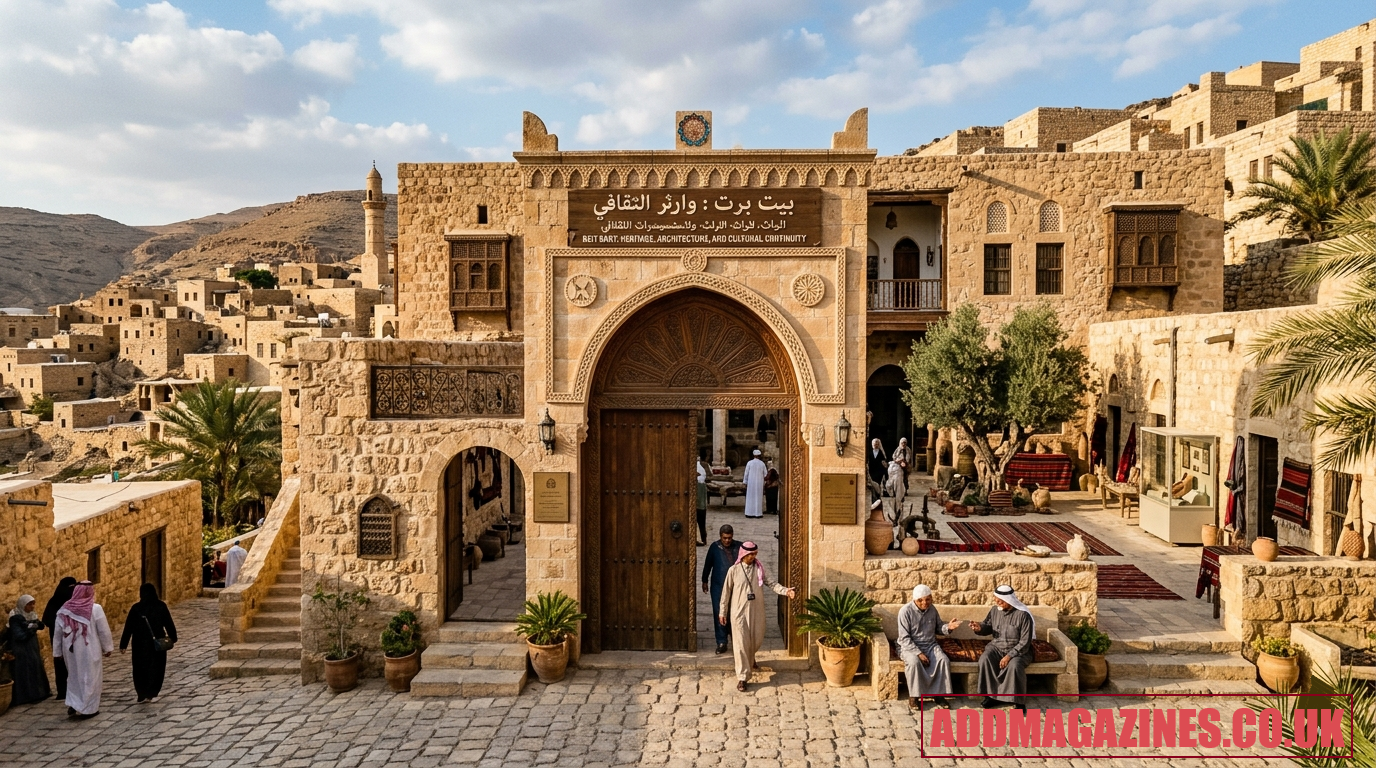
Beit Bart represents more than a name; it reflects a deep-rooted cultural and architectural legacy shaped by Semitic traditions. In many historical interpretations, it is understood as a symbolic space where community life, ancestral memory, and architectural ingenuity intersect. The term itself carries meaning through the word “Beit,” which translates to “house” in both Hebrew and Arabic, often associated with family dwellings or shared communal structures. Over time, Beit Bart has come to symbolize not just a physical place but also a broader idea of belonging, resilience, and continuity. Its significance is often linked with traditional building methods, social cohesion, and the preservation of cultural identity across generations.
Origins and Meaning of Beit Bart
The concept of Beit Bart is deeply rooted in Semitic linguistic and cultural traditions, where “Beit” signifies a house, shelter, or communal structure. Historically, such names were used to define places that were more than just residential areas—they represented social identity and collective memory. Beit Bart is often described as a symbolic representation of ancestral settlements where families and communities lived in close-knit environments. These spaces were not only functional but also deeply meaningful, acting as centers of cultural continuity. The idea behind Beit Bart reflects how early communities structured their lives around shared values, kinship ties, and a strong connection to land and heritage.
Architectural Heritage and Design Principles
The architectural identity of Beit Bart is closely tied to traditional Semitic construction techniques, particularly the use of locally sourced limestone. Buildings were designed with durability and environmental adaptation in mind, ensuring comfort in both hot and cold climates. One of the most distinctive features was the central courtyard, which served as the heart of the structure. This open space allowed natural ventilation, social interaction, and communal activities. The layout was intentional, blending practicality with cultural expression. Thick stone walls provided insulation, while narrow windows minimized heat exposure. These design principles demonstrate a sophisticated understanding of sustainable living long before modern architectural science formalized such concepts.
Courtyard Culture and Community Life
At the center of Beit Bart-style settlements was the courtyard, a multifunctional space that shaped daily life. Families gathered here for meals, celebrations, storytelling, and decision-making. It functioned as both a private and communal area, blurring the boundaries between individual households and collective living. The courtyard was also essential for managing climate conditions, offering shade during the day and retaining warmth at night. Socially, it reinforced bonds between neighbors and extended families, creating a strong sense of unity. This spatial organization encouraged cooperation, shared responsibility, and cultural transmission. Life in such environments was deeply interconnected, with architecture actively supporting social structure and community cohesion.
Material and Construction Techniques
The construction of Beit Bart-style structures relied heavily on natural and locally available materials, particularly limestone and mud-based mortars. These materials were chosen not only for their accessibility but also for their thermal properties, which helped regulate indoor temperatures. Skilled artisans shaped stones by hand, carefully assembling them into thick, load-bearing walls. Wooden beams were often used for roofing, supporting flat or slightly domed structures. The craftsmanship involved was passed down through generations, preserving traditional building knowledge. This method of construction reflects a sustainable approach to architecture, where environmental harmony and resource efficiency were central principles rather than modern innovations.
Social and Cultural Functions
Beyond architecture, Beit Bart served as a vital social institution within traditional communities. It was a space where cultural values were practiced and preserved through everyday interaction. Weddings, religious gatherings, and seasonal festivals often took place within or around these structures. Elders played an important role in guiding community decisions, while younger generations learned customs through observation and participation. Oral storytelling was particularly significant, as it preserved history, myths, and moral teachings. In this way, Beit Bart was not just a physical dwelling but a living cultural system that reinforced identity, continuity, and shared heritage across generations.
Beit Bart in Modern Context
In contemporary interpretations, Beit Bart has evolved into a broader symbol of cultural revival and community engagement. Some modern adaptations describe it as a restored village or cultural center that hosts workshops, exhibitions, and educational programs. These spaces aim to reconnect people with traditional practices while addressing present-day cultural needs. In regions where historical identity has faced disruption, such spaces become especially meaningful. They serve as reminders of continuity and resilience, helping communities maintain a connection to their past while navigating modern challenges. The concept has thus expanded beyond architecture into cultural preservation and social revitalization.
Art, Education, and Cultural Revival
Modern versions of Beit Bart often emphasize artistic expression and education as tools for cultural preservation. Local artists and historians use these spaces to showcase traditional crafts, music, and storytelling techniques. Workshops may include pottery, weaving, and architectural restoration methods, allowing younger generations to engage directly with heritage practices. Educational programs also highlight historical narratives, encouraging reflection on identity and collective memory. These activities transform Beit Bart into a dynamic learning environment rather than a static historical site. By integrating creativity and education, it becomes a platform for cultural revival and intergenerational knowledge transfer.
Identity, Memory, and Resilience
Beit Bart holds strong symbolic value in discussions of identity and resilience, particularly within Palestinian historical contexts. It is often associated with endurance in the face of social and political change, representing a connection to ancestral land and cultural roots. Memory plays a central role in this symbolism, as stories, architecture, and traditions all contribute to a shared sense of belonging. The preservation of such spaces reflects a broader effort to maintain cultural continuity despite external pressures. In this sense, Beit Bart is not only a historical reference but also a living symbol of survival and collective identity.
Conclusion
Beit Bart stands as a powerful representation of heritage, architecture, and cultural continuity within Semitic traditions. From its origins in ancestral settlement patterns to its modern reinterpretation as a cultural and educational space, it reflects the evolution of community life over time. Its architectural principles highlight sustainability and environmental adaptation, while its social functions emphasize unity and shared identity. In contemporary contexts, Beit Bart continues to inspire cultural preservation and resilience, serving as a bridge between past and present. Ultimately, it remains a meaningful symbol of how history, architecture, and community can come together to shape enduring cultural narratives.
For More Updates: