In today’s digital-first world, platforms that simplify daily responsibilities have become essential. One name that often appears in online searches is mystuff 2.0. At first glance, it may seem like a single tool, but in reality, it generally refers to two very different digital solutions serving completely separate audiences. One version is a workplace-focused employee portal commonly associated with McDonald’s staff, while the other is a personal organization app designed for managing belongings, tasks, and household records.
This dual identity often creates confusion, especially for new users trying to determine which platform fits their needs. Whether you are an employee seeking HR-related resources or an individual hoping to organize your personal life more effectively, understanding these two systems is key. This article explores both versions in detail, highlighting their features, benefits, and ideal use cases so you can confidently decide which one aligns with your goals.
Understanding the Two Sides of MyStuff 2.0
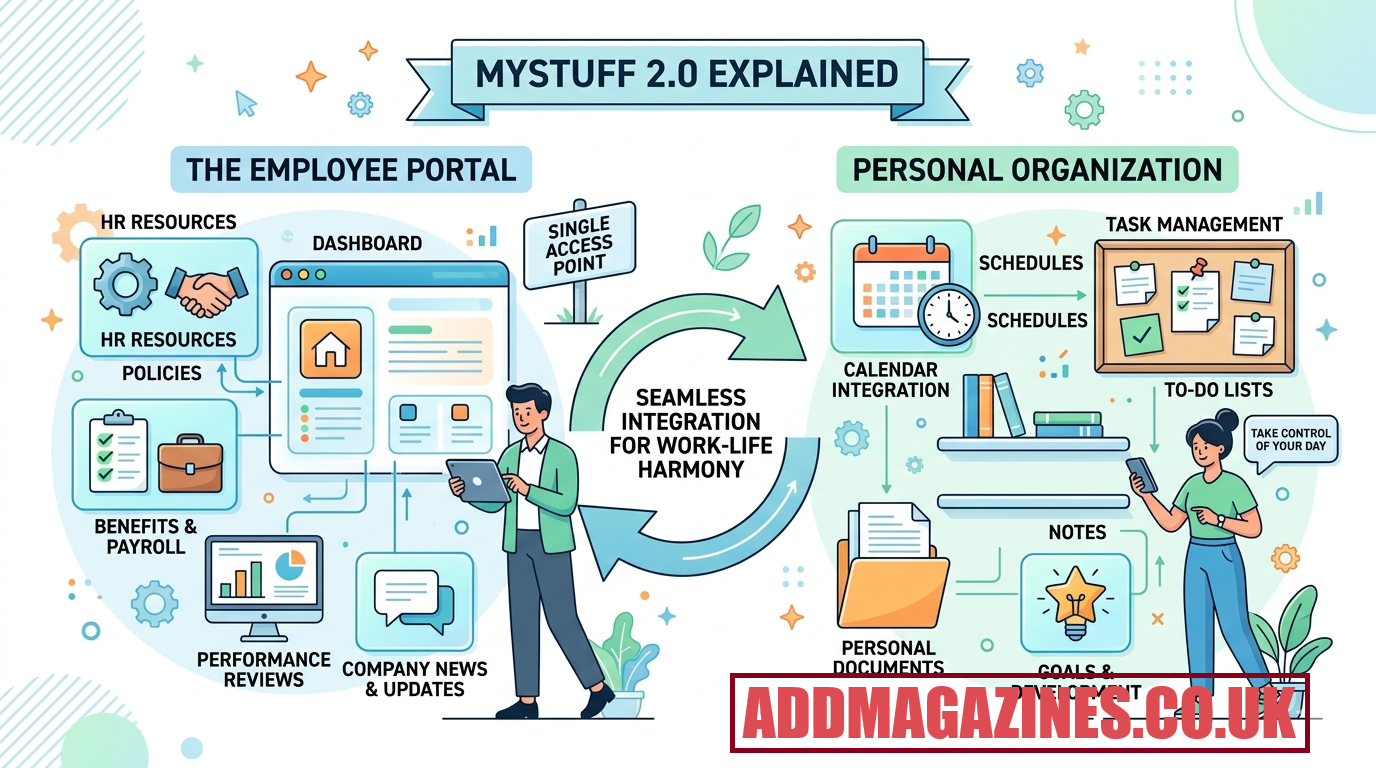
The phrase mystuff 2.0 has become associated with two distinct digital ecosystems. On one side, it functions as a professional employee portal, often used within corporate environments to manage schedules, payroll, and internal communication. On the other, it exists as a consumer-focused application that helps individuals catalog possessions and stay organized in their daily lives.
This distinction matters because each version addresses a different problem. Employees need streamlined access to work-related information, while personal users need tools for inventory tracking and task management. Though they share a similar name, their design, functionality, and purpose differ significantly. Understanding this separation eliminates confusion and helps users maximize the value of the platform they actually need. It also shows how one recognizable term can evolve into multiple digital solutions across industries.
The McDonald’s Employee Portal Version
For McDonald’s employees, MyStuff 2.0 is more than just an online dashboard—it is a central hub for managing work responsibilities. Built to support staff members and managers alike, the platform simplifies administrative tasks that once required direct contact with HR departments or printed schedules.
Employees can log in securely to access their shift rotas, view upcoming work hours, and request changes where permitted. This reduces scheduling confusion and helps teams maintain smoother operations. The portal also provides access to employment documentation, including payslips, tax forms, and training resources. Instead of waiting for paperwork, staff members can retrieve important files instantly.
Managers benefit as well, using the system to oversee staffing needs, monitor team performance, and communicate updates efficiently. This digital approach saves time, improves transparency, and creates a more connected workplace environment for everyone involved.
Shift Management Made Simpler
One of the most appreciated features of the employee portal is its real-time shift management capability. In fast-paced industries like food service, scheduling can be a major challenge. Employees need clarity on when they are expected to work, while managers must ensure adequate staffing at all times.
Through the portal, workers can instantly check schedules, reducing reliance on paper charts or verbal confirmations. This ensures they always have the latest information at their fingertips. Some systems also allow shift swap requests, giving employees flexibility when personal commitments arise.
For managers, automated scheduling tools make it easier to identify gaps and fill open shifts quickly. The result is a more organized workflow that minimizes misunderstandings and last-minute absences. In industries where every hour counts, this efficiency can significantly improve operational performance and employee satisfaction alike.
Secure Access to Employment Documents
Another major advantage of the employee-focused system is secure document storage and retrieval. Instead of handling physical copies of payroll slips or tax forms, employees can access these materials digitally whenever needed.
This feature is especially useful during tax season or when applying for loans, rentals, or other financial services that require proof of income. Documents such as payslips and annual tax summaries can be downloaded directly, saving time and reducing administrative burden.
Security remains a top priority, as sensitive financial and personal information must be protected. Modern authentication systems ensure only authorized users can access these records. This level of digital security provides peace of mind while also improving convenience.
By replacing traditional paperwork with online accessibility, the platform demonstrates how digital transformation can make everyday employment processes smoother and more reliable for workers at every level.
Communication and Company Updates
Workplaces thrive when communication is clear and timely. The employee portal serves as a centralized source for company news, operational changes, and internal announcements. Instead of relying solely on managers to relay updates, staff members can access official information directly.
This creates consistency across locations and reduces the risk of misinformation. Employees stay informed about policy updates, training opportunities, and organizational initiatives without needing separate channels. For large corporations, this unified communication system strengthens alignment and ensures everyone receives the same message.
The platform may also support learning modules and compliance training, helping workers stay current with company standards. This combination of communication and development tools makes the portal more than a scheduling resource—it becomes a complete workforce engagement system.
For employees, this means fewer missed updates and a stronger connection to the organization as a whole.
The Personal Organization App Version
Outside the workplace, another interpretation of mystuff 2.0 exists as a personal organization application. This version focuses on helping individuals manage their belongings, records, and tasks in one digital space.
Rather than serving corporate needs, it supports everyday life. Users can catalog items such as electronics, books, furniture, and collectibles. Each entry may include photos, purchase details, warranty information, and even receipts. This makes it easier to track possessions for insurance, resale, or general awareness.
In addition to inventory management, the app often includes productivity tools like to-do lists, reminders, and deadline tracking. This creates a hybrid system where organization extends beyond physical belongings into personal planning.
For people managing busy households or extensive collections, this app provides structure and peace of mind. It transforms scattered information into a clear, searchable database accessible anytime.
Smart Inventory Tracking Features
One of the standout capabilities of the personal app is inventory tracking. Keeping records of valuable possessions can be difficult, especially over time. Receipts get lost, warranties expire unnoticed, and ownership details become harder to recall.
The app addresses this by creating a digital archive of personal belongings. Users can categorize items, assign values, and store supporting details in one place. If an item is damaged, sold, or stolen, the information is readily available.
This proves particularly valuable during insurance claims or home audits. Instead of scrambling to remember purchase dates or model numbers, users already have organized documentation.
For collectors and hobbyists, the app also offers a convenient way to manage specialized inventories, whether books, gadgets, or rare memorabilia. In short, it brings order to possessions that might otherwise be forgotten or poorly tracked.
Barcode Scanning and Automation
A modern organization app would not be complete without automation, and barcode scanning is one of its most practical tools. Rather than manually entering every product detail, users can scan a barcode and have information populated automatically.
This saves time and reduces errors, especially when cataloging multiple items. Product names, specifications, and sometimes even images can be added instantly. What might take hours with manual entry becomes a much faster process.
Automation makes the app accessible even for users who are not naturally detail-oriented. It lowers the effort required to stay organized, increasing the likelihood that records remain updated.
This feature demonstrates how convenience drives adoption. By simplifying data entry, the app turns organization into a realistic habit rather than an overwhelming project.
Task Management and Daily Productivity
Beyond tracking possessions, the app often includes productivity tools that help users manage responsibilities more effectively. To-do lists, reminders, and priority settings create a practical framework for daily planning.
Tasks can be assigned deadlines, grouped into categories, and reviewed across devices. This ensures important commitments are not forgotten. Whether managing household chores, personal projects, or professional goals, users gain a clearer overview of what needs attention.
The integration of inventory and productivity features makes the app especially versatile. It is not just about what you own, but also about what you need to do.
For busy individuals, this all-in-one approach reduces reliance on multiple disconnected tools. Instead of switching between apps, they can manage possessions and responsibilities within one organized system.
Which Version Is Right for You?
Choosing between these two interpretations of mystuff 2.0 depends entirely on your needs. If you are an employee in a corporate setting, especially within organizations that use dedicated workforce systems, the portal version is designed to simplify your professional life.
If your goal is to manage household items, receipts, warranties, or personal tasks, then the consumer app is the better fit. It supports everyday organization and provides long-term value through better recordkeeping.
The key difference lies in purpose. One is work-focused, centered on HR and operations. The other is personal, built around inventory and productivity.
Recognizing this distinction prevents confusion and ensures you select the right tool for your situation. Though they share a name, their functions are entirely unique.
Final Thoughts
The digital landscape is full of tools designed to improve efficiency, and mystuff 2.0 stands out as a term representing two powerful but very different solutions. One supports employees in managing schedules, documents, and workplace communication. The other helps individuals organize belongings, tasks, and daily life with greater ease.
Both versions highlight how technology can simplify complex routines, whether in a corporate environment or at home. The real value lies in understanding which platform matches your needs and using it to its fullest potential.
As digital systems continue to evolve, tools like these remind us that organization is no longer a luxury—it is a necessity. Whether you are clocking into work or cataloging your home office, the right system can save time, reduce stress, and create a more structured life.
For More Updates: